
This blog post is a translation of “Crafting the Future of Diamond Open Access – Eindrücke von der CRAFT-OA Final Conference in Göttingen” on the DINI blog by Malte Dreyer and Kathrina Müller (translation by DeepL, checked by Kelly Achenbach and Léa Foumany)
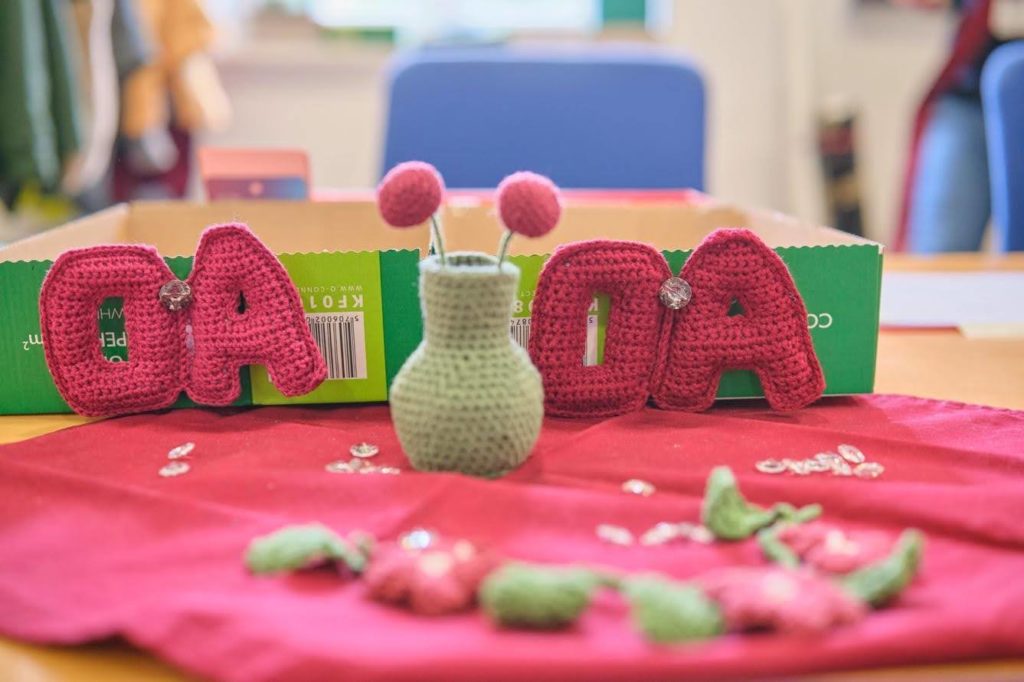
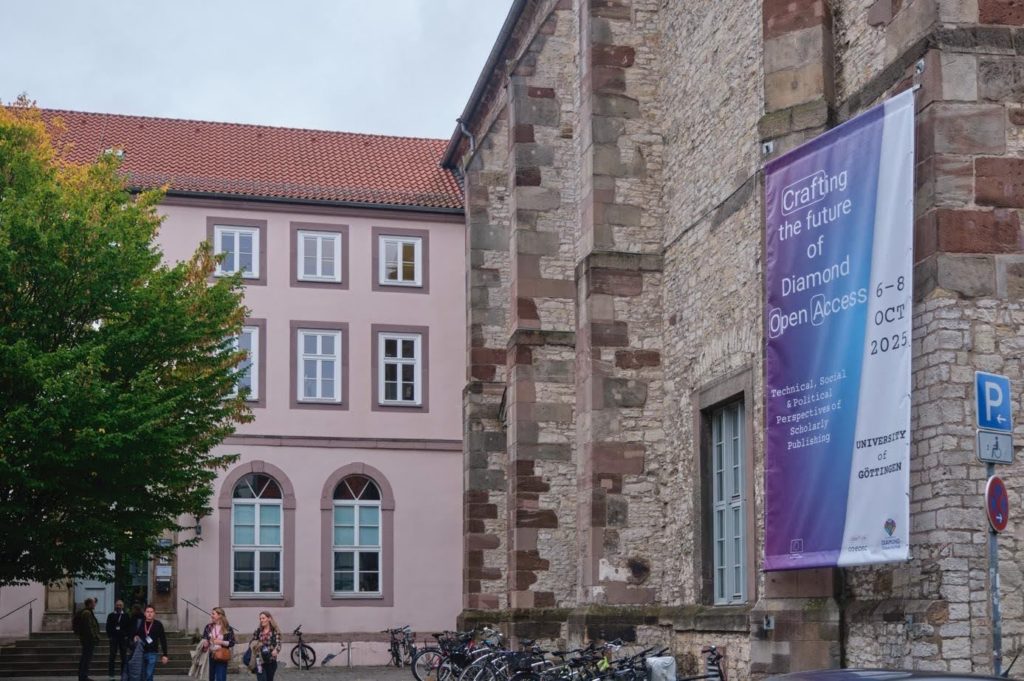
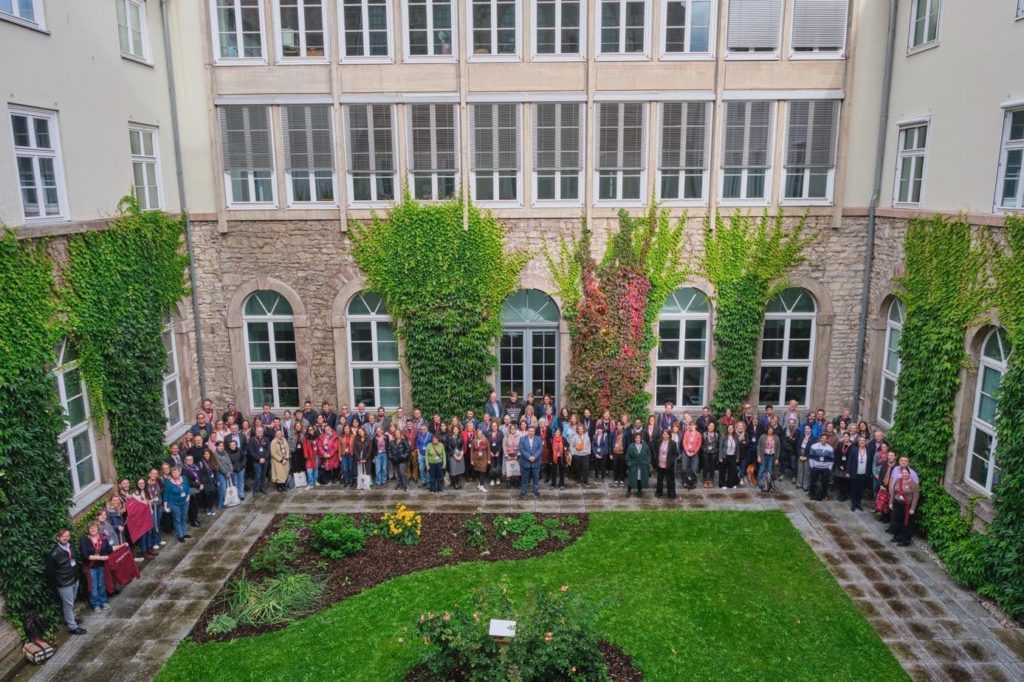
From October 6 to 8, 2025, the European and international Open Access community gathered in Göttingen under the motto “Crafting the Future of Diamond Open Access: Technical, Social & Political Perspectives of Scholarly Publishing.” The event was hosted by the Lower Saxony State and University Library Göttingen (SUB), which once again proved to be a lively meeting place for discussions on open science and sustainable publication infrastructures.
Crafted OA: by the community, for the community
The conference marked the conclusion of the EU-funded CRAFT-OA project, which has worked in recent years to strengthen the technical and organisational basis for Diamond Open Access (Diamond OA). CRAFT-OA has developed standards, tools and training programmes to make Diamond journals more visible, interoperable and sustainable.
The programme was designed to alternate between presentations on the project results and contributions from the community on various aspects of Diamond OA. This created a productive dialogue between the project and the community – an exchange that contributed to the dissemination of the project results on the one hand, but also enabled the project members to learn from the experiences and perspectives of the community on the other. In this way, the conference made an important contribution to the sustainable reuse of the results developed in the project.
Another key aspect was the integration of CRAFT-OA outputs/results into existing and emerging infrastructures for Diamond OA in individual European countries. If Diamond OA is to be designed ‘by the community for the community’ – i.e., scientific communication is operated, maintained, and developed by the scientific community – then this cannot be achieved through centralised guidelines at the European level, given the diversity of scientific cultures and different national conditions.
In a pioneering position paper, Johan Rooryck and Pierre Mounier (both OPERAS) therefore advocated the establishment of national capacity centres. These centres would adapt standards, tools, and policies for scientific publishing to the respective national circumstances – while remaining part of a pan-European network – as Johan Rooryck explained in his keynote speech. Other representatives of the network coordination, the European Diamond Capacity Hub (EDCH), were also present at the conference.
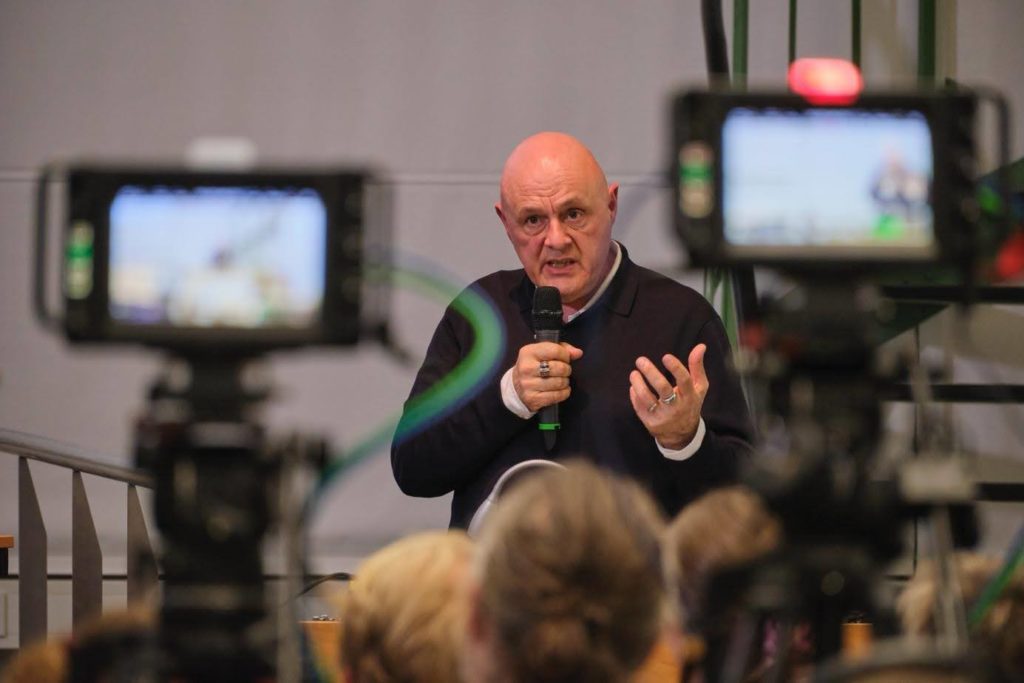
Many of these capacity centres have now been established or are in the process of being set up. Their representatives attended the conference, making their own contributions and taking the opportunity to engage in both informal and formal discussions, as well as intensive networking activities.
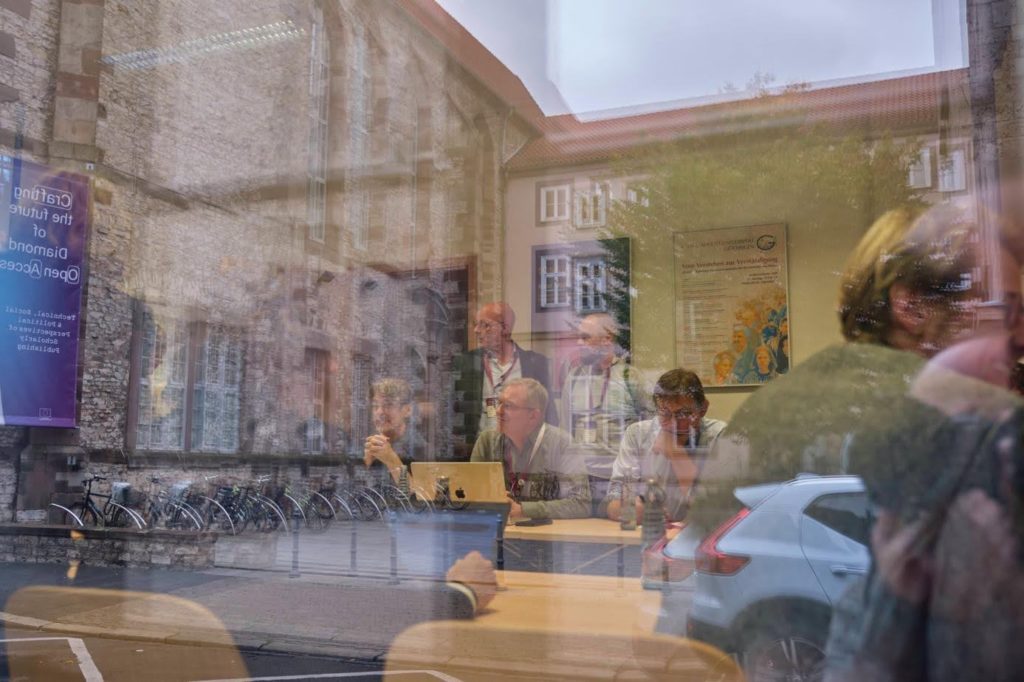
The CRAFT OA conference was not only a forum for exchanging ideas about technical tools, workflows and practices, but also a valuable opportunity to further shape and strengthen the European network for Diamond OA strategically and politically.
Topics and formats
The topics of the call and the conference spanned the political concerns, the importance of community building, and the technical needs surrounding Diamond OA. The latter formed the main focus of the contributions – unsurprisingly, since the organising CRAFT-OA consortium is primarily a technical project. Presentations were given in two formats: traditional lectures (20 minutes plus discussion) and lightning talks – short, concise presentations accompanied by a poster. Participants found this format particularly entertaining, informative, and effective.
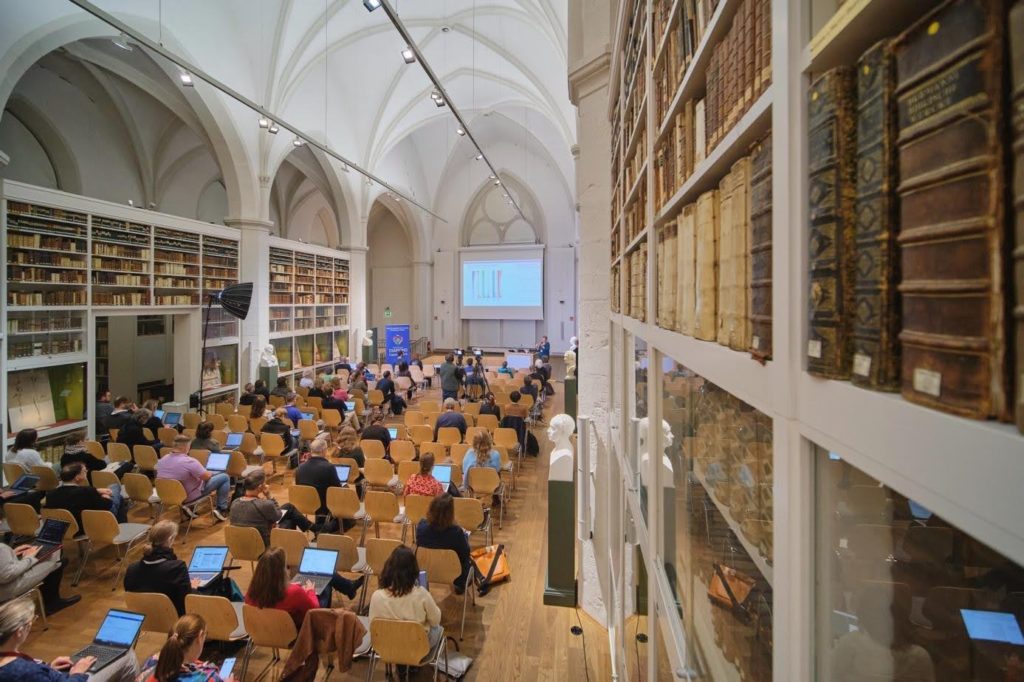
Key areas and trends: technology, financing, and global and local perspectives
A glance at the programme made it clear that the diversity of topics reflected the breadth of the Diamond OA landscape – from technical solutions and community building to political strategies.
Numerous posters and lightning talks showed how the technical side of publishing is evolving. Contributions such as ‘AI-Powered Copy-Editor for Diamond OA Workflows’ and ‘Ensuring Metadata Integrity using XML’ made it clear that standardised output procedures and artificial intelligence are finding their way into editorial and production processes and unlocking potential for accelerating the development of Diamond OA. At the same time, the focus remained on quality and openness: topics such as open metadata, non-commercial identifiers (‘Beyond the DOI’) and the DINI certificate underlined the aim of making technological innovation interoperable, sustainable and transparent.
At the same time, the contributions made it clear that Diamond OA is readjusting traditional business models and forms of publication financing. Contributions such as ‘Opening the Future – or why publishers can do Diamond OA too’ highlighted the diversity of alternative solutions. The Lightning Talks presented innovative approaches to collaborative financing – economic stability through cooperation – with initiatives such as DeFDOA (proposal for a levy-financed Diamond publication system), the Open Library Economics (OLEcon) Consortium and KOALA (a consortium model for financing OA journals). It became clear that there are no standardised solutions, but rather many initiatives and ideas adapted to the respective publication economies and scientific cultures, based on cooperation and solidarity. ‘Diamond OA is not a market, but a common good,’ one panelist aptly summarised.
Another focus was on the publication platforms and workflows that make Diamond OA possible in practice. Among other things, the European Diamond Discovery Hub (EDCH) was presented – an OPERAS initiative to strengthen the Diamond community at national and European levels. The associated EDCH Forum and a Registry for Diamond journals also featured prominently in the conference programme, with conference participants invited to make use of these services.
In addition, success stories from across Europe were presented: from Masaryk University with its MUNI Journals, to dEjournals from the University of Debrecen, to Diamond University Press from Milano University Press. Community engagement means learning from the successes and misfortunes, the experiments and established traditions in the community. Therefore, lectures on broad strategic lines and major concepts were in the minority compared to the exemplary contributions on individual success stories.
Diamond OA in Europe and beyond – policy and perspectives
However, this did not mean that the political dimension was entirely absent. In sessions such as ‘Standing up for Diamond: influencing national OA policy in Canada,’ it became clear that Diamond is part of international and European open science strategies. Representatives from the Netherlands, Italy (Analysing the Italian Diamond Open Access landscape with Open Access resources), Switzerland (diamondopenaccess.ch) and India reported on national developments in the Diamond sector and their support strategies in research evaluation and communication. Many countries are actively working to establish governance structures for Diamond OA.
Highlight: Keynote von Dr. David Oliva Uribe (UNESCO-Seniorberater)
One of the highlights of the conference was the keynote speech by Dr David Oliva Uribe, Senior Consultant at UNESCO, who presented the key findings of the UNESCO Global Consultation on Diamond Open Access (2024–2025). This global consultation, which involved over 2,900 participants from 92 countries, aimed to identify the current challenges, needs, and future prospects of the Diamond OA community, closely following the UNESCO Recommendation on Open Science (2021).
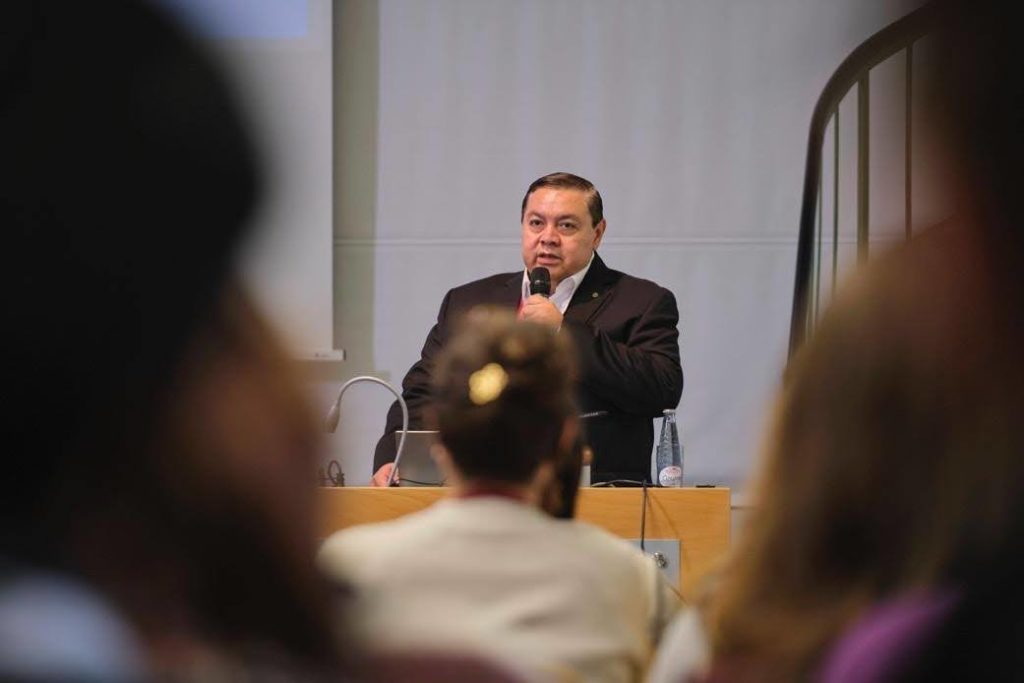
The survey, which was conducted in four languages (English, French, Spanish and Portuguese), provided a global, high-quality snapshot of attitudes towards Diamond Open Access. It clearly showed that Diamond OA has an international presence, but that there are differences in visibility, funding and institutional support. Many participants described Diamond OA as a value-based practice: it enables openness, cost savings and greater visibility for research – but above all, it promotes fairness, participation and diversity of knowledge.
At the same time, it became clear that a lack of financial and time resources, insufficient knowledge about the platforms and advantages of Diamond OA, and a lack of institutional support are key obstacles. One important finding concerns the issue of governance: the majority of respondents prefer regional coordination to centralised global control. Dr Uribe emphasised that the future of Diamond OA lies in voluntary, decentralised alliances that share common principles but can respond to regional characteristics. A report with the survey results is due to be published shortly and will certainly make for interesting reading.
Highlight: The launch of the Diamond Discovery Hub (DDH)
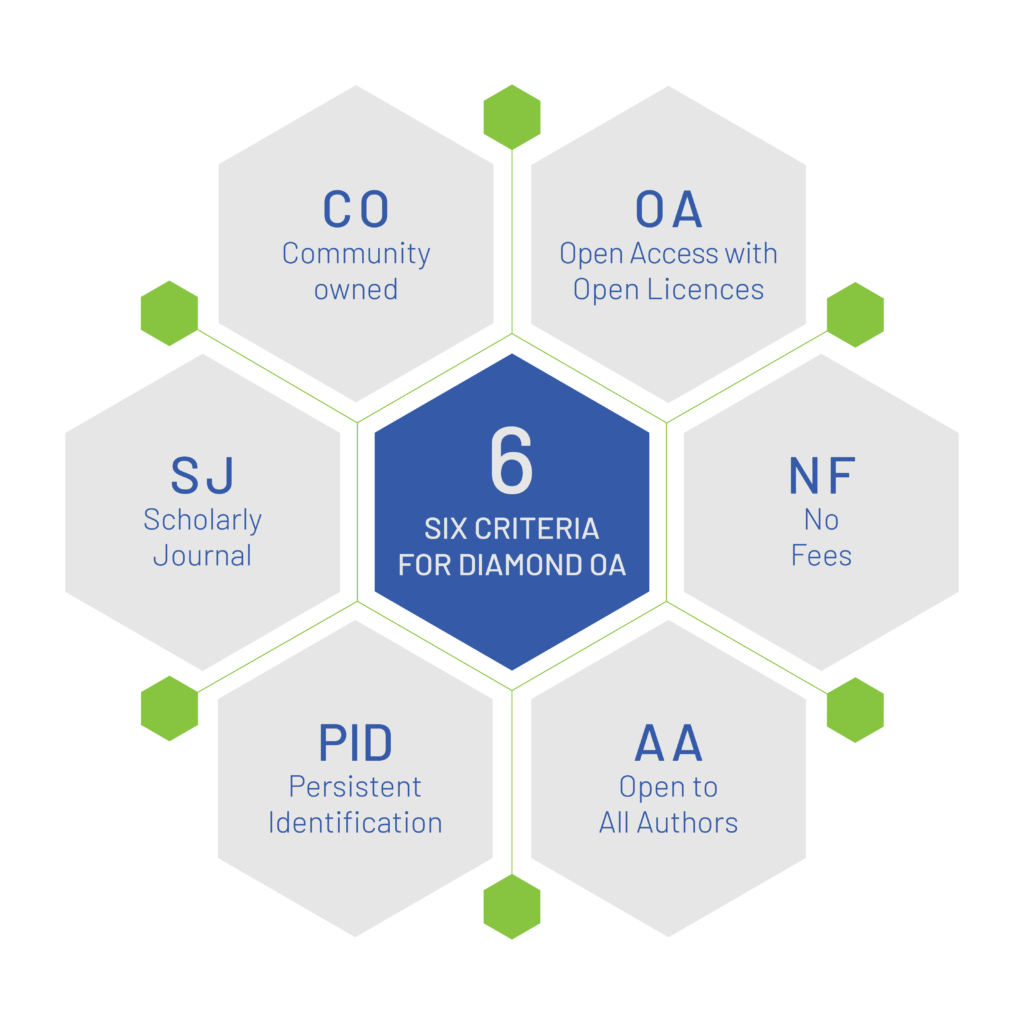
Another highlight of the conference was the hard launch of the Diamond Discovery Hub (DDH) – a CRAFT-OA developed European directory for Open Access journals without author fees (Diamond OA), which has been available in beta since the middle of the year. The DDH sees itself as a central, trustworthy point of contact for the visibility and discoverability of Diamond OA publications in Europe. The hub aims to bring together information about Diamond journals and institutional publication services, which have often been scattered, and to provide transparent, verifiable metadata. The platform is thus intended not only to facilitate scientific exchange but also to increase the recognition and credibility of Diamond OA journals.
In her presentation, Hanna Varachkina (SUB Göttingen) introduced the functioning and target groups of the DDH: The DDH is aimed equally at journals and institutional publication services, authors, readers, funding organisations, aggregators and research institutions. It serves as an open, growing register that is dynamically evolving – a ‘living catalogue’ of the European Diamond OA landscape. A key feature of the DDH is its trust model: the journals and institutions included come from ‘trusted sources’ – verified organisations that are validated via registration through the EDCH registry. This creates a quality framework that combines transparency with openness. New entries are made based on self-reported information, and they must meet the six clear verification criteria. FAQs and support services facilitate participation and data submission.
Highlight: Panel Discussion “Diamond Dreams & Data Streams – Shaping Sustainable Open Access”
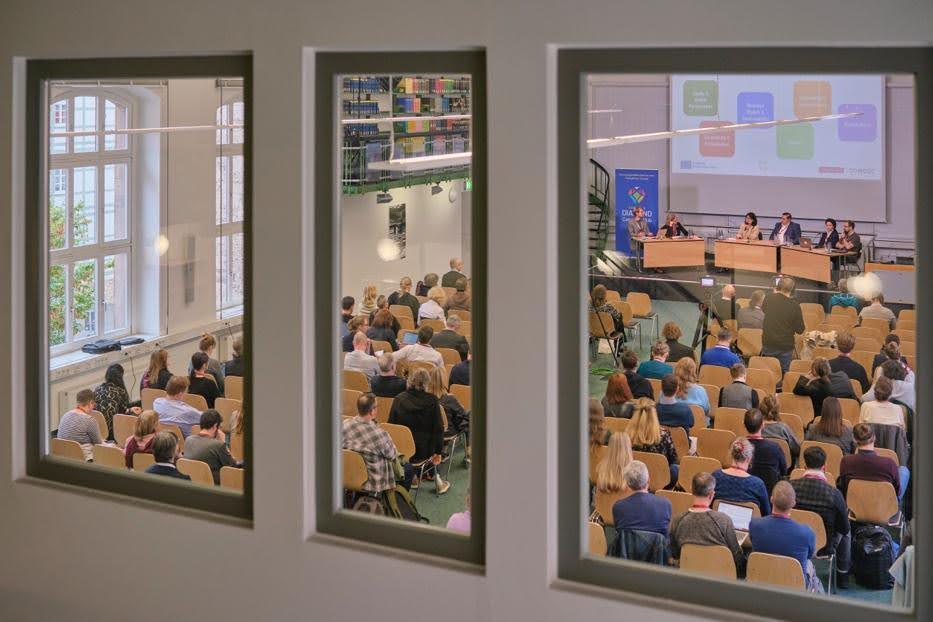
Under the title ‘Diamond Dreams & Data Streams: Shaping Sustainable Open Access’ and moderated by Margo Bargheer and Malte Dreyer (SUB Göttingen), an expert panel discussion developed international perspectives on the future of Diamond Open Access – with David Oliva Uribe (UNESCO), Youngim Jung (KISTI, Korea), Marc Bria (Universitat Autònoma de Barcelona, Spain) and Urooj Nizami (Public Knowledge Project, Canada).
In their introduction, the moderators made it clear that Diamond Open Access is as multifaceted as scientific communication itself – an interplay of social, technical and political dimensions that is largely driven by the commitment of the community. Accordingly, four thematic blocks were identified and discussed: community and participation, technology and infrastructure, justice from a global perspective, and business models and sustainability.
The introduction focused on the question of community: Who actually supports Diamond Open Access? David Oliva Uribe referred to the ethical foundation of the movement: the shared convictions that find expression in the strong international support for the UNESCO Recommendation for Open Science. Youngim Jung added that scientists should be made aware of open publication practices at an early stage – for example, through teaching and information services. Finally, the panel looked to the future: Diamond OA is currently at a point where neoliberal appropriation has not yet taken place, but, according to Marc Bria, this is certainly to be expected. Not a cheerful prospect, but equally a warning against allowing oneself to be blinded by one’s own idealism.
Outlook: From projects to practices
The three days in Göttingen impressively demonstrated how far the Diamond OA movement has come in such a short time – and that it is based on a foundation of technology, cooperation and shared responsibility that can be further expanded.
But even beyond the panels, it was clear at the conference that Diamond OA thrives above all on commitment and community, from developers of open source tools, publishers of small journals, but also representatives of large institutions, and, last but not least, coordinators who bring science and technology together at conferences and in projects such as this one.
There was also much praise for the organisation of the conference, which, despite its high level of professionalism, was designed with attention to detail and a personal touch. In other words, handcrafted Open Access.
Comments
All presentations from the conference (for which we received permission to post) can be found in the Zenodo community at https://zenodo.org/communities/craft-oa_conference/records.
Recordings of the presentations are available on YouTube.
Day 1 :https://www.youtube.com/watch?v=XVgeQVDn5GA
Day 2: https://www.youtube.com/watch?v=LDuA6IBGCXA
Day 3: https://www.youtube.com/watch?v=NEhu-C4mpDI
A series of DINI blog posts has already presented some of the project results from CRAFT-OA and components of the developing European infrastructure, such as the launch of the EDCH https://doi.org/10.57689/DINI-BLOG. 20250217, as well as the EDCH Registry and Forum https://doi.org/10.57689/DINI-BLOG.20250901. Further posts, including on the Diamond Open Access Standard, are in preparation.
Note: The first section, ‘Crafting the Future of Diamond Open Access – Impressions from the CRAFT-OA Final Conference in Göttingen,’ and the section ‘Highlight: The Launch of the Diamond Discovery Hub (DDH)’ were designed with the help of GTP5.
Recommended next read:
- Blog post: “CRAFT-OA Final Conference“
 CRAFT-OA is funded by the European Union under Grant Agreement no. 101094397. Views and opinions expressed are however those of the author(s) only and do not necessarily reflect those of the European Union or European Commission. Neither the European Union nor the granting authority can be held responsible for them.